
Chief Justice of India Sanjiv Khanna has recused himself from hearing pleas related to the alleged illegal felling of hundreds of trees in the Delhi Ridge area. The decision comes after a previous bench, led by former CJI D Y Chandrachud, sought a personal affidavit from Delhi Lieutenant Governor V K Saxena in the case, which also sought contempt proceedings against certain DDA officials. CJI Khanna stated that his prior involvement with the Delhi LG while serving as the NALSA chairman would make it inappropriate for him to hear the plea. The bench has ordered the listing of the pleas before a different bench starting November 27.

Delhi's Ridge, encompassing areas like Kamla Nehru Ridge, played a pivotal strategic role during the 1857 Revolt against British rule, with sites like the Flagstaff Tower, Hindu Rao's house, and Pir Ghaib serving as crucial military positions and silent witnesses to the intense fighting.

Delhi's air quality slightly deteriorated on Wednesday, moving into the 'poor' category with an AQI of 232, and is forecast to worsen to 'very poor' by Friday due to unfavourable meteorological conditions. PM2.5 remains the dominant pollutant, with vehicular emissions and biomass burning identified as major contributors. The city also experienced its coldest morning of the season.

Delhi's air quality slipped into the 'very poor' category for the first time this season on Monday, with an AQI of 312. This triggers Stage 2 of the Graded Response Action Plan (GRAP), leading to stricter measures to control pollution. Minimum temperatures were also noted.

Heavy rainfall in Delhi led to widespread waterlogging and severe traffic congestion, bringing the national capital to a standstill, with the India Meteorological Department issuing a red alert for further heavy rain.

Heavy rainfall in Delhi led to widespread waterlogging, traffic disruptions, and a significant drop in minimum temperatures across the city. Key areas like Lutyens' Delhi, Supreme Court, and AIIMS were affected, while the air quality remained satisfactory.

Delhi is experiencing heavy rainfall and strong winds, prompting the India Meteorological Department (IMD) to issue a red alert, which is impacting ongoing preparations for the crucial BRICS Summit.

Delhi Police have arrested a 29-year-old man for allegedly stealing copper cables and damaging security equipment along the Airport Express Metro Line near Buddha Jayanti Park.

Most north Indian states reported below-normal temperatures on Monday, with rain and thunderstorms lashing parts of Uttar Pradesh, Rajasthan, and Himachal Pradesh. The southwest monsoon is expected to arrive in Kerala in the next two to three days.

The southwest monsoon has advanced across northern Indian states, leading to widespread rainfall, waterlogging, road blockages, and rain-related deaths, particularly in Himachal Pradesh and Rajasthan. The Centre is monitoring the situation, especially concerning potential drought conditions in some areas due to the El Nino effect.

Ali Fazal brings a wounded ferocity to his role that makes it one of his best performances so far, notes Deepa Gahlot.
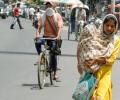
North India is experiencing an intense heatwave, with temperatures soaring to 48 degrees Celsius in some areas. Several states have issued warnings and advisories as the heatwave is expected to continue.

A new western disturbance brought thunderstorms and rain to parts of northern India, with hailstorms and snow reported in several regions. The weather caused flooding in Jammu and Kashmir and prompted a yellow alert in Delhi.

Delhi experiences a biting chill with 'cold day' conditions and dense fog, coupled with 'very poor' air quality. The IMD forecasts continued cold weather and potential light rain.

Large parts of India are experiencing a severe heatwave, with temperatures soaring to dangerous levels. Authorities have issued alerts and health advisories as the heatwave intensifies across multiple states.

Sacred spots and soaring peaks: Bucket-listing across the heartland. Roopa Unnikrishnan and her father journey through the heart of India.

Northern states in India are experiencing severe heatwave conditions, with temperatures reaching up to 46.6 degrees Celsius. The heatwave has impacted daily life, leading to a decline in tourism and increased power demand. Authorities have issued advisories and implemented measures to mitigate the effects of the extreme heat.

Delhi recorded its coldest January morning in three years with the minimum temperature dropping to 3 degrees Celsius. Cold wave conditions are expected to persist, and air quality has deteriorated to the 'very poor' category.

Colonel Sonam Wangchuk, a decorated Kargil War hero known as the 'Lion of Ladakh' and recipient of the Maha Vir Chakra, has passed away. He was celebrated for his gallantry and leadership in securing the Chorbat-La in the Batalik sub-sector during Operation Vijay in 1999.

Early morning rain in Delhi lowers temperatures. The weather office predicts cloudy conditions and thunderstorms for the day due to a western disturbance.

The Delhi government is embroiled in multiple litigations with the Lieutenant Governor in the Supreme Court including its plea challenging the Centre's law establishing pre-eminence of the LG over the elected dispensation in controlling services in the national capital.

Heavy rains lashed Delhi, leading to a red alert, traffic snarls, and waterlogging. The IMD predicts continued rainfall.
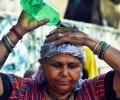
Temperatures are likely to remain in a similar range until Thursday, with a gradual fall expected from June 13.

The Delhi government must come before the court and tell "how it will compensate for the damage caused to the environment due to its illegal acts", the bench said.
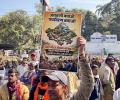
Union Environment Minister Bhupender Yadav accuses the Congress of spreading misinformation regarding the new definition of the Aravallis and defends the government's commitment to protecting the mountain range while allowing limited, legal mining.

The Mungeshpur weather station recorded a high of 48.8 degrees Celsius, eight notches above the normal. It recorded a minimum temperature of 27.6 degrees Celsius, a notch above the season's average.

Kafeel Ahmed told a news channel that his son has always been very polite and never fought with anyone.

India emerged from the war militarily bruised and strategically altered. The United States, under the guise of friendship, had succeeded in achieving what open alignment never could: The psychological and political repositioning of India within the Cold War order, points out Dr Kumar.
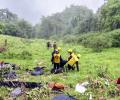
The recent helicopter crash near Kedarnath, in which seven lives were lost, has proven yet again that aviation regulatory authorities have not learnt lessons from similar air mishaps in the challenging Kedar valley and have done little to improve flying conditions.

It also rained heavily in other parts of North India.

Delhi's minimum temperature on Wednesday morning plunged to 4.4 degrees Celsius -- the season's lowest -- making the national capital colder than Dharamsala, Nainital and Dehradun.

Six weather stations across Delhi recorded over 100 mm of rain in a single day, the India meteorological department (IMD) said on Thursday, categorising it as an "extremely intense spell".

'Within minutes, my mobile began ringing. It was National Security Adviser Brajesh Mishra, asking why the Iranians were complaining.' 'I explained that we had only restated our position in the light of the conclusion reached by the IAEA, but will remain helpful to Iran to reach a consensus.' 'Then came a call from Foreign Secretary Kamal Sibal, repeating what Mishra said about the Iranian complaint.' 'I was very impressed that Iran was able to reach two top officials in India to intervene at short notice,' recalls Ambassador T P Sreenivasan.
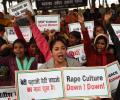
The Centre on Tuesday urged the Supreme Court not to hear this week the pleas on the vexed legal question of whether a husband should enjoy immunity from prosecution for the offence of rape if he forces his wife, who is not a minor, to have sex.

A leopard strayed into a village in north Delhi's Wazirabad early on Monday, creating panic in the area and injuring eight residents before being tranquillised by forest department officials after an over five-hour-long rescue operation.

Five people died in rain-related incidents in Delhi Friday as Monsoon arrived with a fury early in the morning, lashing the city with its highest rainfall in a single day of June in 88 years which brought it to a standstill with streets flooded, traffic in chaos and some commuters stranded on roads.

The two IEDs he was found with were 'fully ready' and just needed to be activated with a timer, police said. Security was stepped up in the national capital and in neighbouring Uttar Pradesh following the arrest.

Delhi sweltered under intense heat as the Safdarjung observatory, considered the official marker of the national capital, noted a high of 43.8 degrees Celsius, four notches above the normal average.

The Met Office has issued a yellow alert, warning of moderate rain which could cause more problems to the residents of Delhi.
'Indian Army officers always lead their men into battle or combat. Pakistani officers are seldom seen at the front.'
